Maria Paula Toro-Gómez
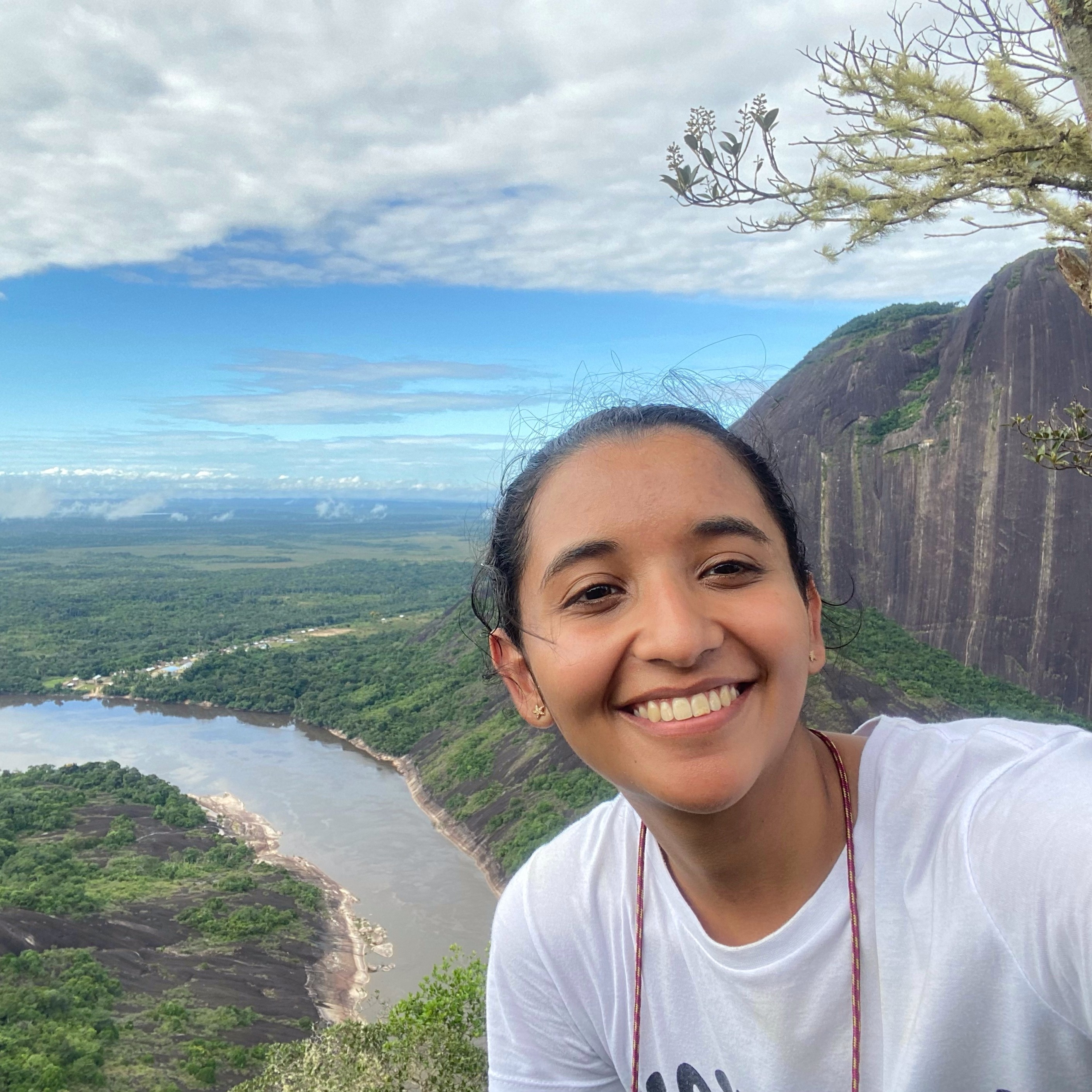
Hi! I am Maria Paula, a biologist researcher at the Alexander von Humboldt Biological Resources Research Institute (IAvH). My work focuses on bioacoustics, biodiversity monitoring, and amphibian ecology. Feel free to email me at mtoro(at)humboldt.org.co
Biologist researcher at the Alexander von Humboldt Biological Resources Research Institute (IAvH). I work at the intersection of bioacoustics, biodiversity monitoring, and amphibian ecology.
I’m Maria Paula, a biologist and researcher at the Alexander von Humboldt Biological Resources Research Institute (IAvH), where I work at the Biological Collections and Species Management Centre, specifically with the Environmental Sound Collection.
My research interests span behavioral and evolutionary ecology, biodiversity monitoring, climate change, and anthropogenic impacts, using amphibians and bioacoustics as a study system. I am particularly interested in passive acoustic monitoring and the development of ecological datasets that support biodiversity assessment and conservation in the Neotropics. My work integrates field ecology, biological collections, and acoustic data analysis, often in interdisciplinary and collaborative contexts.
Currently, I am involved in creating and curating datasets based on passive acoustic monitoring of multiple taxonomic groups, contributing tools for large-scale biodiversity monitoring and conservation planning.
Previously, I was a junior researcher in the Orquídeas – Science for Peace Program of the Colombian Ministry of Science, Technology, and Innovation. This program supports women in science and focuses on identifying structural causes of violence in Colombia. Through this project, I worked on amphibian monitoring in collaboration with Awá Indigenous communities in the southeastern Colombian Pacific, combining ecological research with community-based conservation approaches.
I obtained my undergraduate degree in Biology from the Universidad del Quindío, where I was part of the EECO research group. My undergraduate thesis explored the relationship between parental care and antipredator strategies, specifically aposematic coloration, in poison frogs (Dendrobatidae).
Academic profiles
ResearchGate ·
Google Scholar ·
ORCID ·
Bluesky ·
X: @mariaptoro
Publications
Peer-reviewed journal articles
-
Vargas-Salinas F, Toro-Gómez MP, Casas-Cardona S, López-Aguirre Y, Rojas-Montoya M & Duarte-Marín S. (2025).
Smaller ones also matter: species diversity, collection patterns, and functional traits in the amphibian and reptile collection of the Universidad del Quindío, Colombia.
Biological Journal of the Linnean Society 146(4). (Special issue: Mobilizing Natural History Collections in the Global South) -
Cañas JS, Kahl S, Denton T, Toro-Gómez MP, et al. (2025).
Overview of BirdCLEF+ 2025: Multi-Taxonomic Sound Identification in the Middle Magdalena, Colombia.
CLEF 2025 – Working Notes 4038: 2909–2919. -
Cañas JS, Toro-Gómez MP, Sugai LSM, et al. (2023).
A dataset for benchmarking Neotropical anuran calls identification in passive acoustic monitoring.
Scientific Data 10, 771.
https://doi.org/10.1038/s41597-023-02666-2
[Project webpage] -
Montilla SO, Arcila-Pérez LF, Toro-Gómez MP, Vargas-Salinas F & Rada M. (2023).
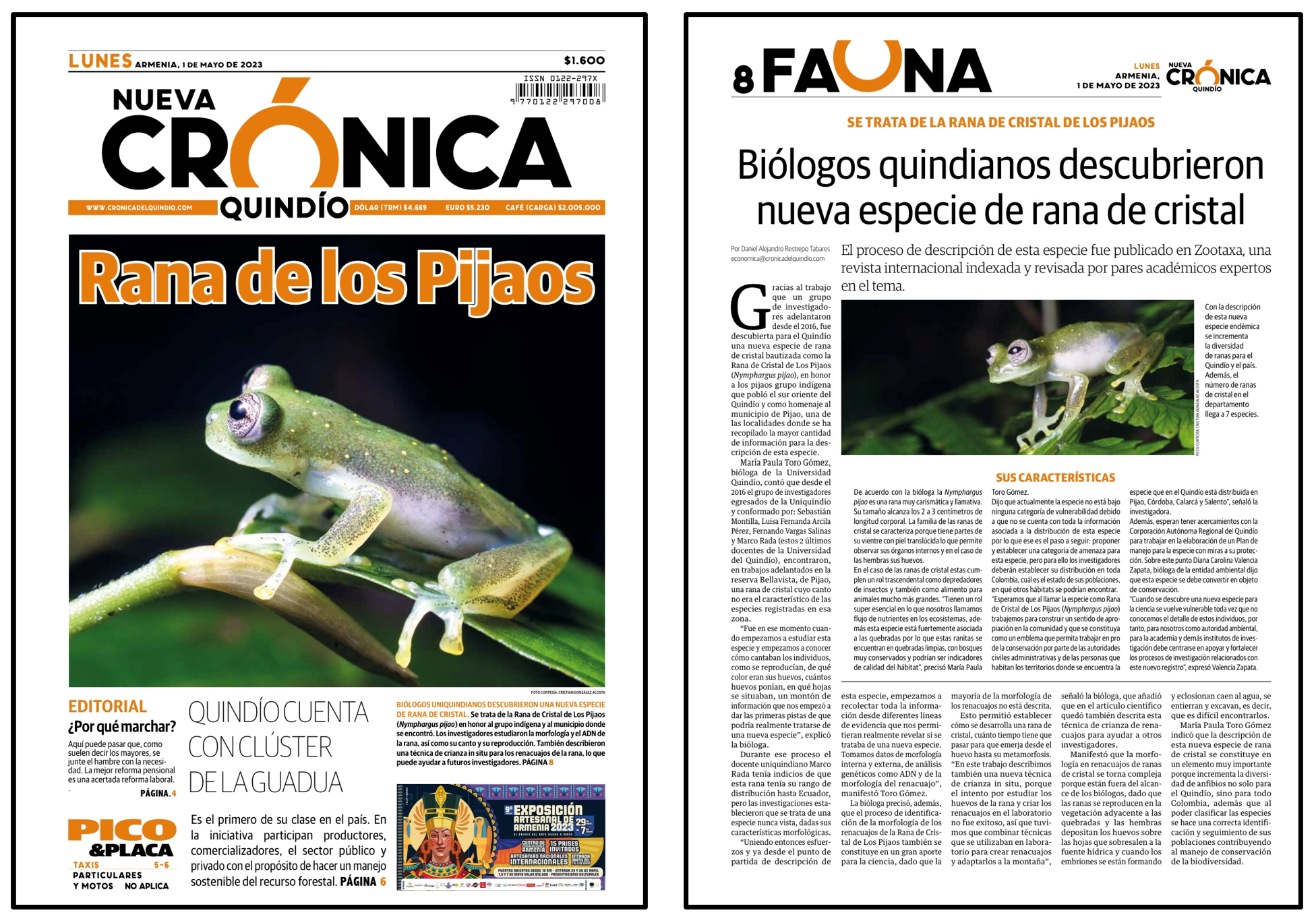
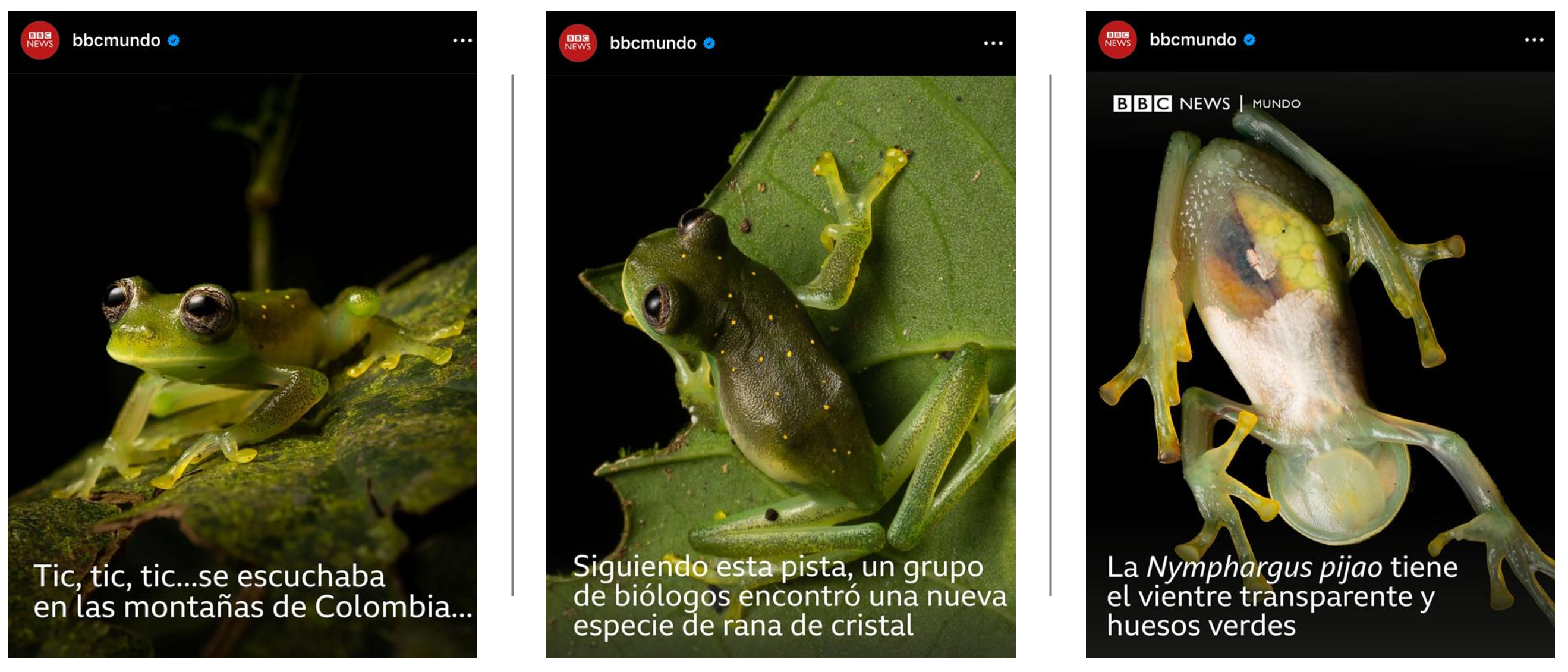
Multidisciplinary approach reveals a new species of glassfrog from Colombia (Anura: Centrolenidae: Nymphargus).
Zootaxa 5271(1): 1–48. -
Toro-Gómez MP, Carvajal-Castro JD, Casas-Cardona S & Vargas-Salinas F. (2023).
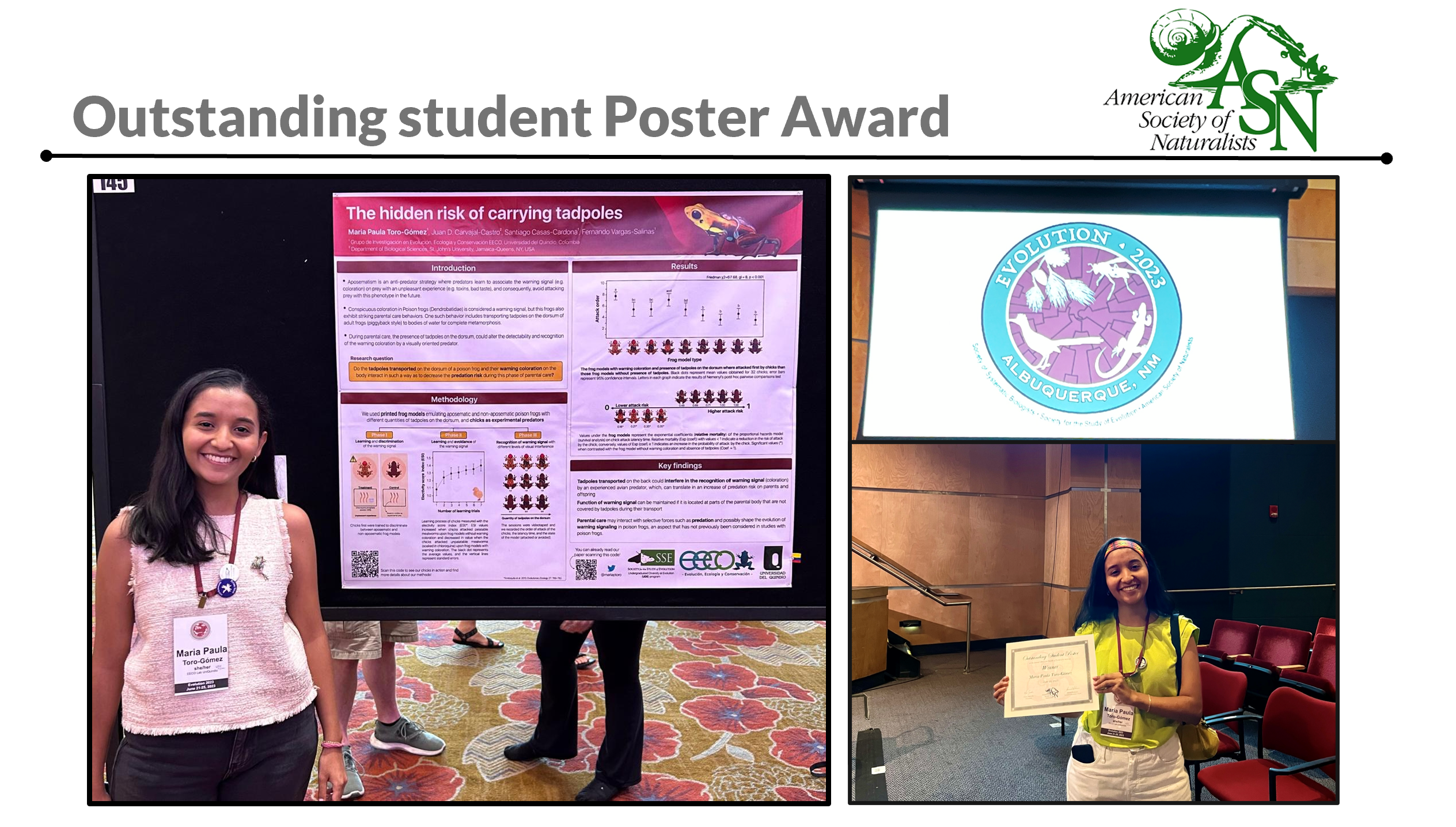
Experimental evidence in a poison frog model suggests that tadpole transport on the dorsum may affect warning signal effectiveness in poison frogs.
Evolutionary Ecology 37(2): 267–289.
Featured paper.
Book chapters
-
Rivera-Robles D, Rojas-Montoya M, Toro-Gómez MP, et al. (2025).
Puestas y larvas de los anfibios del departamento del Quindío, Colombia. -
Vargas-Salinas F, Toro-Gómez MP, et al. (2025).
Beyond species richness: a behavioural perspective of Andean anuran diversity.
Research interests
Ecology and biodiversity monitoring have a strong and growing relationship with machine learning. Machine learning provides novel tools to process, extract, and analyze complex ecological data, while ecological systems offer challenging environments due to their scale, complexity, and variability.
My interests include challenges such as domain shift, spatiotemporal correlations, fine-grained acoustic classification, learning across data modalities, self-supervised learning, and long-tailed distributions. I am also interested in collaborative research with local communities to co-create conservation tools with tangible impacts on biodiversity conservation.
Mentorship, teaching & academic service
-
Instructor, Bonplandia Children’s Science Laboratory (2025).
Science outreach program for primary school students (≈72 contact hours). -
Instructor, II Introductory Course on Bioacoustics for Herpetology (2025).
Hybrid short course for undergraduate students and early-career professionals (≈32 contact hours). -
Junior researcher mentor, Campus 48 – XI National Meeting on Scientific Vocations (MinCiencias, 2024).
-
Academic Committee Member, Red Ecoacústica Colombiana (2020–2025).
Outreach
-
Description of a new species of glassfrog from Colombia (Nymphargus pijao).
-
Outstanding Student Poster Award, American Society of Naturalists – Evolution 2023.
-
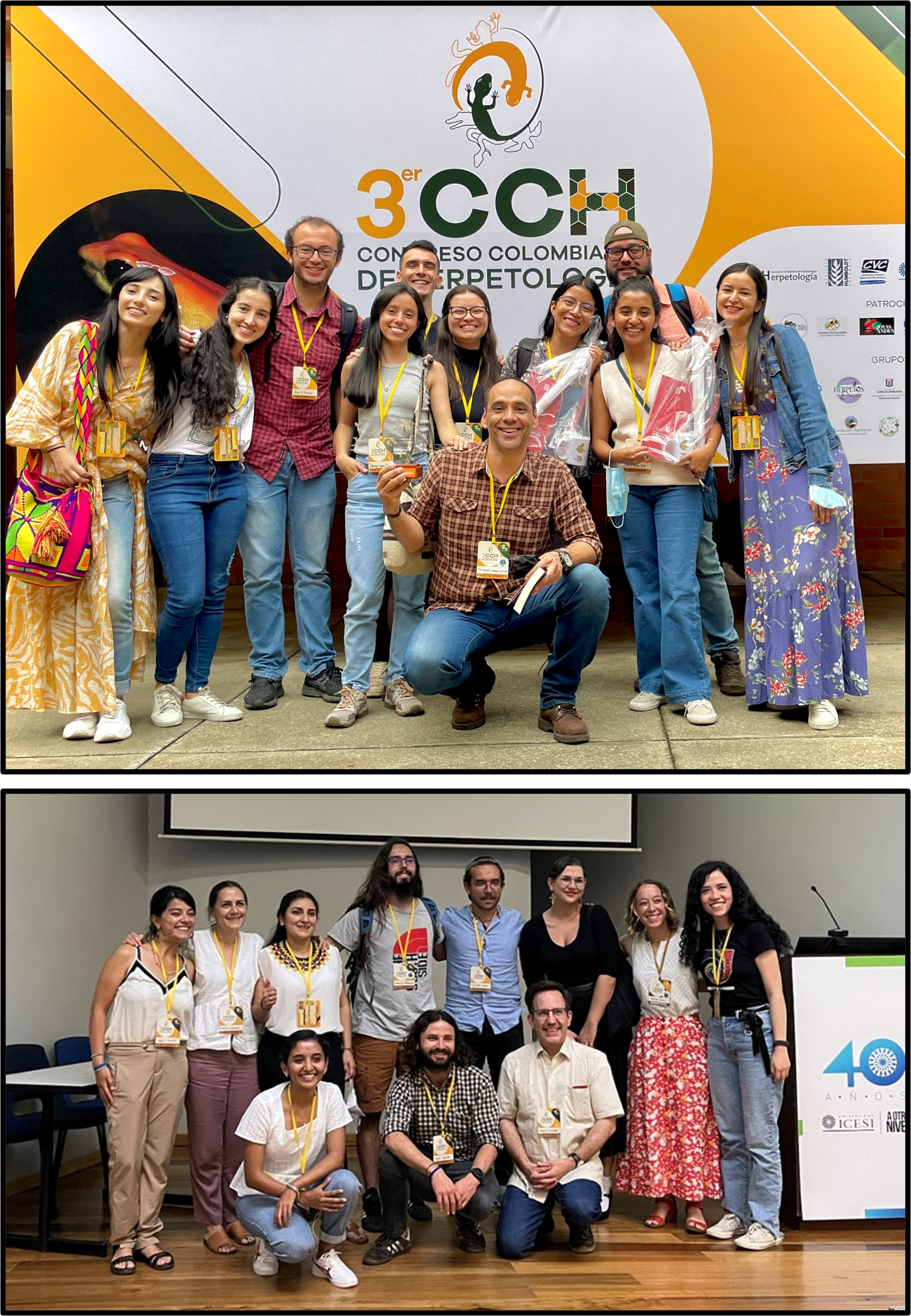
Best Oral Presentation Award, III Colombian Herpetology Congress.
Podcasts and talks
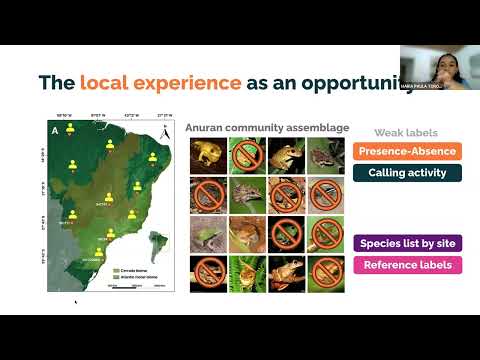
BioacousTalks – Cornell Lab of Ornithology
Machine Learning for Tropical Acoustic Monitoring: Challenges and Opportunities
Contact
📧 Email: mtoro@humboldt.org.co
🔗 ORCID: https://orcid.org/0000-0001-8875-6619
🌍 Location: Colombia
I am open to research collaborations, interdisciplinary projects, mentoring opportunities, and international initiatives related to biodiversity conservation, bioacoustics, and science communication.